 Listicle
How to Use Regular Vendor Audits to Protect Dealership Profit
Last Updated: November 1, 2026
Quick Summary
Vendor audits protect dealership profit by checking every vendor invoice, contract, and service charge against what your dealership actually agreed to pay, catching billing errors, duplicate payments, and hidden fees that quietly compound month after month. Because vendors can bill what the system allows rather than what the contract says, regular vendor audits turn that leakage into recovered overpayments and corrected contracts.
- Start with your ten largest vendor relationships by annual spend for the clearest findings.
- Match each invoice to the contract rate, quantity to usage records, and service to original scope.
- Score vendors on annual spend, error history, contract complexity, and operational criticality to set review cadence.
- Tier 1 vendors with high spend and complex contracts should be reviewed every six months.
- Event triggers like vendor acquisitions or renewal notices should pull a vendor forward regardless of tier.
Table of Contents
- Why Regular Vendor Audits Protect Dealership Profit
- The Financial Leakage Hiding in Your Dealership Vendor Invoice Audit
- What a DMS Expense Audit Reveals About Your Technology Costs
- A Vendor Audit Checklist for Dealerships: What to Review
- How Long Does a Vendor Audit Take?
- Building an Audit Calendar and Risk-Scoring Model
- What to Ignore: Common Bad Advice About Cutting Vendor Costs
- Find My Profit Leaks: Starting Your First Vendor Audit
- Frequently Asked Questions
Why Regular Vendor Audits Protect Dealership Profit
Vendor audits check every vendor invoice, contract, and service charge against what your dealership actually agreed to pay.
A dealership running dozens of vendor relationships across DMS, technology, marketing, and facilities has hundreds of line items flowing through accounts payable each month, each small enough to escape attention and large enough to matter across a year.
Below, we break down where the leakage hides, what a proper vendor audit checklist looks like, and how to build an audit rhythm that keeps vendor pricing honest.
The Financial Leakage Hiding in Your Dealership Vendor Invoice Audit
Most dealerships assume their invoices are correct because the vendor is reputable and the amount looks familiar. That assumption is where profit quietly disappears.
A dealership vendor invoice audit is a line-by-line comparison of what you were billed against what your contract, purchase order, or agreed rate card says you should have been billed.
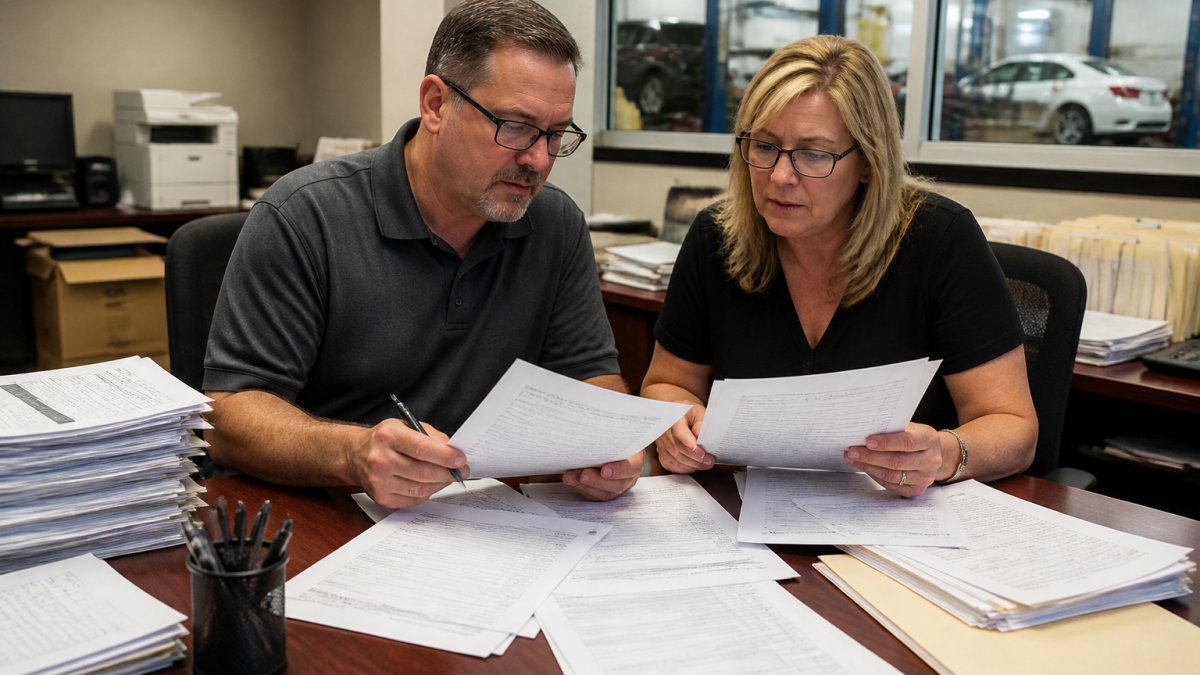
Billing Errors, Duplicate Payments, and Hidden Fees
- Billing errors: rate increases that were never approved, quantities that do not match what was delivered, and services billed at list price when the contract specifies a discounted tier.
- Duplicate payments: the same invoice submitted twice under slightly different numbers, or two vendors billing for overlapping services.
- Hidden fees: administrative charges, "technology fees," and per-user surcharges buried in the fine print of a service agreement.
A common mistake is reviewing only the total at the bottom of the invoice. All Relative reviews dealership vendor invoices against agreements and expected pricing to identify billing discrepancies and unnecessary charges. The total can look stable while the line items underneath have shifted. For a structured way to work through this, see our guide on auditing dealership vendor invoices.
Checking Vendor Contracts Against Agreed Pricing
Your contract is the baseline for every audit. Pull the original agreement, the rate schedule, and any amendments, then compare them to the last several months of invoices side by side.
Watch for auto-renewals that locked in a higher rate, service tiers upgraded without a documented request, and pricing that drifted after a vendor acquisition or account manager change. Vendors are not obligated to remind you when a promotional rate expires.
What a DMS Expense Audit Reveals About Your Technology Costs
The dealership management system is usually the single largest technology line item in the store, and the least examined.
- Modules licensed for every user when only a handful of staff touch them
- Third-party integrations billed separately that duplicate functionality already included
- Support tiers that no one on staff can explain
The pattern we see most often is overlapping products: two tools doing roughly the same job, both billing monthly, because a department head bought one and inherited the other. Neither is wrong on its own. For a deeper walkthrough, see our guide on auditing dealership software costs.
A Vendor Audit Checklist for Dealerships: What to Review
A vendor audit checklist for dealerships should cover every vendor category in the store, not just the obvious technology contracts.
- DMS and core software: Pull the module schedule, user license count, integration list, and support tier. Compare licensed users to active users by role, and flag modules no department can explain.
- Marketing and advertising: Pull agency retainers, digital ad management fees, website hosting, and third-party lead vendors. Compare retainer scope to deliverables, check for overlapping lead sources, and confirm ad management fees are not layered on top of platform spend without disclosure.
- Facilities and services: Pull janitorial, landscaping, waste, and utility contracts. Compare service frequency and square footage to the invoice, and check for automatic escalators that were never approved.
- Office and IT: Pull copier leases, phone systems, managed IT, and cybersecurity agreements. Compare device counts and seat counts to invoices, and flag support tiers no one on staff can explain.
- Inventory and logistics: Pull transportation, recon vendor, and parts supplier agreements. Compare rate cards to invoices, and check for fuel surcharges or handling fees added after the contract was signed.
- Compliance and training: Pull required training platforms and regulatory subscriptions. Compare seat counts to actual users, and confirm you are not paying for duplicate compliance content across two platforms.
For each vendor, the audit procedure is the same four-step loop: match the invoice to the contract rate, match the quantity to the delivery or usage record, match the service to the original scope, and document any gap with the invoice number and contract clause.
Compliance, Performance, and Risk Assessment
SLA compliance matters most with service providers. If your contract promises response times, uptime, or resolution windows, check whether they were met. Credits are often owed and rarely claimed. Vendor compliance covers regulatory requirements, insurance certificates, and data handling obligations. Vendor performance is the honest conversation about service quality: is the vendor still delivering what justified the original contract? And risk assessment asks what happens to dealership operations if this vendor fails, raises prices sharply, or is acquired.
Quantifying the Return on a Vendor Audit
A checklist produces findings. A return calculation tells you whether the audit was worth running. Most practitioners estimate ROI with four inputs: recovered overpayments, avoided future costs, internal time cost, and any third-party audit fee.
A simple net savings formula is recovered overpayments plus first-year avoided costs, minus internal time cost and audit fee. Recovered overpayments are one-time, while avoided costs recur only if the contract or process that allowed the overcharge is fixed.
How Long Does a Vendor Audit Take?
The duration of a vendor audit depends on how many vendors are in scope and how organized the records are, and multi-location groups running different systems will generally need longer. For concrete timeline facts, see how long does a vendor audit take.
The timeline breaks down roughly like this:
| Phase | What Happens | Typical Duration |
|---|---|---|
| Scoping | Identify vendors, pull contracts, set priorities | 3-5 days |
| Document collection | Gather invoices, agreements, payment records | 1-2 weeks |
| Line-by-line review | Compare billing to contract terms | 1-2 weeks |
| Findings and follow-up | Report results, contact vendors, resolve errors | 1-2 weeks |
A common variable is document collection, which can stretch the front end of an audit when records are scattered across departments.
Building an Audit Calendar and Risk-Scoring Model
One audit protects you for one cycle. A repeatable audit calendar protects you permanently.
Score each vendor on four inputs, each on a 1-to-5 scale, then multiply by an annual spend weight:
- Annual spend: total invoiced dollars in the last twelve months. Higher spend gets more weight because errors scale with volume.
- Error history: number and dollar value of billing discrepancies found in prior reviews. A vendor with a clean history still gets a light check, but repeated errors move it up the calendar.
- Contract complexity: number of rate tiers, modules, add-ons, escalators, and amendments. Complexity creates places for pricing to drift.
Rank the resulting scores and assign cadence from the top down.
| Risk Tier | Typical Profile | Review Cadence |
|---|---|---|
| Tier 1 | High spend, high criticality, complex contract | Every six months |
| Tier 2 | Mid spend or moderate complexity | Annual review |
| Tier 3 | Low spend, simple contract, clean history | Light annual check or event-triggered |
Event triggers matter as much as the calendar.
The calendar should also name an owner. In most stores the controller or office manager owns the schedule, accounts payable flags invoice anomalies, and the dealer principal signs off on Tier 1 findings. Without a named owner, the calendar becomes a document nobody uses.
A final trade-off: scoring every vendor takes time up front. The goal is not a perfect score but a defensible reason to review one vendor before another.
What to Ignore: Common Bad Advice About Cutting Vendor Costs
The worst advice in this space is to treat every vendor conversation as a negotiation to be won.
Three pieces of advice worth ignoring:
- "Just cut the lowest-value services." Cutting a service without understanding what depends on it creates operational gaps that cost more than the service did.
- "Push every vendor for a discount." Vendors recover margin somewhere, often in service quality or the next renewal.
- "Your DMS provider handles this." Your vendor is not an independent advocate for your spend. They are a party to the contract.
The goal is not to nickel-and-dime vendors. It is to make sure every dollar buys something real. That distinction keeps relationships intact while protecting margin.
Find My Profit Leaks: Starting Your First Vendor Audit
Start with your ten largest vendor relationships by annual spend. Pull the contracts, pull twelve months of invoices, and compare them line by line. You will find something in the first week, and what you find will tell you how deep the problem runs.
That is where ALL RELATIVE INC. comes in. The firm acts as an independent advocate for the dealer and does not represent vendors or sell software. Its work covers line-by-line product and billing analysis and identification of overlapping or unnecessary services.
Get started with ALL RELATIVE INC. and find out what your vendor spend is actually costing you.
Frequently Asked Questions
What are the benefits of regular vendor audits for dealerships?
Regular vendor audits protect profit by catching billing errors, duplicate payments, hidden fees, and unnecessary or overlapping services before they compound. They also confirm that vendors are charging the agreed pricing in your contracts and meeting service-level agreement terms. Over time, a repeatable audit process strengthens internal controls, improves vendor performance, and gives dealership leadership reliable data for cost-control decisions across DMS, technology, and service vendors.
How often should a dealership audit its vendors?
Most dealerships benefit from a full vendor audit once a year, with higher-risk contracts reviewed more often. Use a risk-based schedule: audit DMS and technology agreements and any vendor with recent price changes or service complaints every six months, and lower-spend vendors annually. A written audit calendar with assigned owners keeps reviews from slipping. After any contract renewal, ownership change, or new software rollout, add an off-cycle review to confirm billing matches the new terms.
How do dealerships audit vendor invoices for billing errors?
Start by pulling payment records and matching each invoice to its contract's agreed pricing, quantities, and service levels. Look for duplicate payments, charges for cancelled or unused services, rate increases that were never approved, and fees that appear on statements but not in the contract. Reconcile invoice totals against the general ledger and DMS vendor records. Document every discrepancy with supporting documentation, then send vendors a written follow-up requesting credits or corrective action.
What happens after a dealership finds an error in a vendor audit?
Document the finding with the invoice, contract, and payment records, then notify the vendor in writing and request a credit or refund. Track each item through to resolution and confirm the correction appears on the next statement. For recurring issues, renegotiate contract terms or add review checkpoints. Summarize audit findings in a standardized report for leadership so patterns are visible, and schedule a follow-up review to confirm the fix held.