 Listicle
7 Best Dealership Expense Management Software for 2026
Last Updated: November 5, 2026

Quick Summary
The best dealership expense management software for 2026 includes Ramp for multi-location spend control, SAP Concur for large dealer groups, and Navan, Expensify, Zoho Expense, Emburse, and Corpay for narrower needs. None of these platforms audits your DMS or vendor contracts, which is why we recommend pairing software with an independent contract review.
- Ramp suits dealer groups running several rooftops on one chart of accounts with department-level card limits.
- SAP Concur fits groups with heavy travel, training, and auction-related expenses, but is heavy for single-point stores.
- Score vendors 1 to 5 on audit trail, approval controls, multi-location support, accounting fit, and reporting depth.
- Confirm all five pre-signature questions with a clear yes, or keep looking before you commit.
- Software flags the payment; a DMS contract audit questions whether the billed products match actual usage.
Table of Contents
- Why Dealership Expense Management Software Falls Short Without a DMS Audit
- Best Dealership Expense Management Software for 2026: Quick Comparison
- Dealership Expense Management Software Reviews: 7 Platforms Ranked
- Expense Management Software Features That Matter to a Dealership
- Receipt capture and mobile expense entry
- Corporate cards and spending controls
- Approval workflows and policy enforcement
- Accounting integration and dealer management system connectivity
- Department and location-level expense allocation
- Automation and artificial intelligence
- Real-time spend visibility and reporting
- Automotive-specific expense categories
- Where Software Stops: The DMS Contract Audit Gap
- Dealership Vendor Expense Tracking Across Departments and Rooftops
- Find My Profit Leaks: Book a Vendor and DMS Contract Review
- Frequently Asked Questions
Why Dealership Expense Management Software Falls Short Without a DMS Audit
Dealership expense management software can capture receipts, issue virtual cards, and enforce spending policies across every rooftop you own. What it cannot do is read your dealer management system contract line by line and tell you that you are paying for three services you stopped using two years ago.
Best Dealership Expense Management Software for 2026: Quick Comparison
Here is how the leading platforms stack up for dealership use, based on the spend controls, card programs, and approval workflows each is known for.
| Platform | Best For | Standout Strength | Pricing Model |
|---|---|---|---|
| Ramp | Multi-location spend control | Corporate cards, real-time controls, vendor payments | Subscription, contact for quote |
| SAP Concur | Large dealer groups | Travel and expense at scale | Subscription, contact for quote |
| Navan | Travel-heavy operations | Combined travel and expense | Subscription, contact for quote |
| Expensify | Simple receipt capture | Receipt scanning and reporting | Subscription, contact for quote |
| Zoho Expense | Budget-conscious stores | Expense tracking within the Zoho suite | Subscription, contact for quote |
| Emburse | Policy enforcement | Approval workflows and audit controls | Subscription, contact for quote |
| Corpay | Vendor payments | Spend and payment processing | Subscription, contact for quote |
Dealership Expense Management Software Reviews: 7 Platforms Ranked
Each platform below earns its place for a different reason. None of them audits your contracts, which is exactly where our first pick comes in.
1. ALL RELATIVE INC.: The Independent Audit Layer
Our top recommendation is not software at all, and that is the point. To see what your software stack is actually costing you, see how much profit is hiding in your expenses.
Best for: dealerships that already track spend but suspect the contracts behind it are leaking money. Skip if: you have never reviewed a vendor invoice and just want receipt capture.

2. Ramp: Spend Controls for Multi-Location Stores
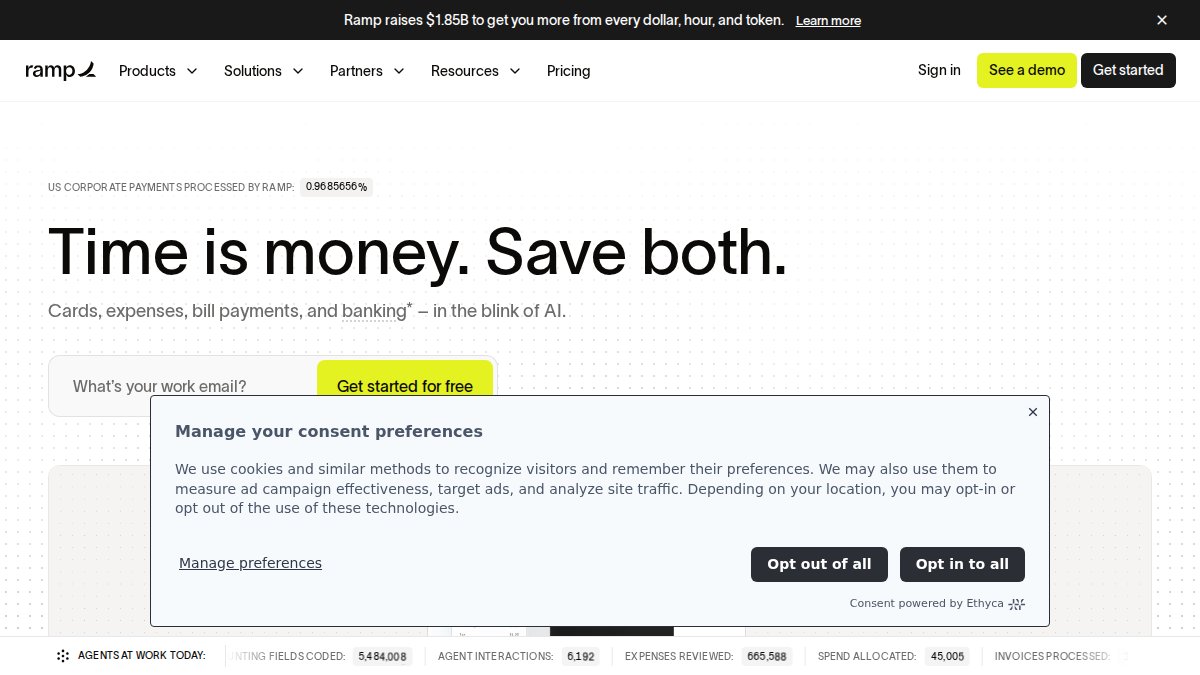
Its corporate cards, real-time spending controls, approval workflows, and vendor payment tools suit a dealer group running several rooftops on one chart of accounts. Department-level card limits map cleanly to service, parts, and F&I cost centers. The limitation: Ramp tracks what you spend, not whether the DMS contract behind the spend is fair.
3. SAP Concur: Travel and Expense for Large Dealer Groups
For groups with heavy travel, training, and auction-related expenses, SAP Concur remains a fixture in travel and expense comparisons. It handles reimbursement workflows and policy enforcement at scale. Smaller single-point stores will find it heavier than they need.
4. Navan, Expensify, Zoho Expense, Emburse, and Corpay
Each covers a slice of expense management. None of them reads a DMS contract.
Expense Management Software Features That Matter to a Dealership
Generic feature lists describe what every platform does. The question for a dealership is whether each feature survives contact with a service drive, a parts counter, and a group office that closes the books across multiple rooftops.
Receipt capture and mobile expense entry
Service advisors, parts staff, and lot attendants rarely sit at a desk, so capture has to work from a phone in a few taps. Look for photo capture with OCR that reads the vendor, amount, and date, plus the ability to attach a repair order or stock number at the moment it happens.
Corporate cards and spending controls
Virtual and physical cards with merchant-category and department-level limits are the core control. For a dealership, the useful controls are more specific: a per-transaction cap on a parts card, a fuel-only restriction on a lot vehicle card, and a card that cannot be used at a competing franchise's parts department.
Approval workflows and policy enforcement
Approvals need to route by department and by rooftop, not to a single manager. A parts purchase above a threshold should route to the parts manager and then to the controller; a customer hospitality expense should route to the sales manager. Policy enforcement should be configurable by location, because a single-point store and a five-rooftop group do not share the same thresholds.
Accounting integration and dealer management system connectivity
This is where most generic comparisons stop at "integrates with QuickBooks." A dealership needs the expense tool to post cleanly to the accounting system behind the dealer management system, with the chart of accounts mapped to departments and cost centers. Ask how the tool handles the general ledger export, how it treats a repair order as a cost object, and whether it can sync vendor records and payment data without duplicate entry.
Department and location-level expense allocation
Allocation is the feature that makes dealership reporting useful. Expenses should be assignable to a department (sales, service, parts, F&I, fixed operations, administration), a rooftop or store, a cost center, a vehicle, and where relevant a repair order. That lets a controller see that one store's service department is running a higher supplies cost per repair order than another.
Automation and artificial intelligence
AI in expense tools mostly shows up in three places: receipt data extraction, duplicate detection, and anomaly flagging. Duplicate detection is especially valuable in a dealership, where the same subscription or vendor charge can appear under different names across stores. Treat AI output as a first pass, not a final approval; the tool flags, a person decides.
Real-time spend visibility and reporting
Reporting should break down by department, location, vendor, and category, and it should be current enough to act on within the month. The most useful dealership reports compare spend per repair order, per vehicle sold, and per rooftop, because raw totals hide which location is out of line.
Automotive-specific expense categories
A dealership's expense mix includes categories a generic tool does not anticipate: parts purchases and outside parts sourcing, shop supplies and consumables, sublet repairs, vehicle transport and auction fees, fuel for lot and loaner vehicles, customer hospitality, technician tools and equipment, uniform and safety supplies, and manufacturer-related program expenses.
If overlapping tools are part of the problem, find out how much software your dealership is paying for.
Where Software Stops: The DMS Contract Audit Gap
Every platform above stops at the invoice. None of them opens your DMS agreement and checks whether the products billed match the products used. That gap is where dealerships lose the most, because DMS contracts bundle services that renew quietly and bill automatically. For a step-by-step walkthrough, see how to audit dealership DMS contracts.
Dealership Vendor Expense Tracking Across Departments and Rooftops
Does it capture receipts by mobile photo for service and parts staff?- Can approval workflows route by department and by rooftop?
- Does it integrate with your accounting system and exchange data with your dealer management system?
If a vendor cannot answer all five with a clear yes, keep looking. A dealership expense management audit checklist gives you a structured way to score each option before you commit, and it pairs with the scorecard above so the comparison is documented rather than remembered.

Find My Profit Leaks: Book a Vendor and DMS Contract Review
Software tells you what you spent. It does not tell you what you should have spent. ALL RELATIVE INC. reviews your vendor costs, contracts, invoices, and recurring services confidentially, and we show you where the waste is before you commit to anything. Start with the costs on your mind and request a confidential review.
Frequently Asked Questions
What is the best expense management software for a car dealership?
There is no single answer because it depends on size and structure. Expense management tools vary by size and structure, so compare them against your own needs. None of them audit your DMS or vendor contracts, which is where dealerships often lose the most money. Pair a software tool with an independent contract review to cover both sides.
Can expense management software track DMS and technology vendor costs?
Most platforms can record a DMS invoice as an expense and route it through approval workflows, but they do not analyze whether you are paying for unused licenses, duplicate services, or billing errors. That requires a line-by-line DMS contract audit against pricing benchmarks. Treat software as the system of record for dealership vendor expense tracking, and treat an independent audit as the tool that finds the waste inside those recurring charges.
How much does dealership expense management software cost?
Pricing varies by platform, user count, and transaction volume, and most vendors quote per-seat or per-transaction fees rather than publishing a flat rate. Ask each vendor for a total cost estimate that includes implementation, onboarding, card fees, and accounting integration work. Compare that total against the recurring vendor charges an audit could recover, since software fees are only worth paying if the visibility they create leads to real savings.
Is expense management software worth it for a small dealership?
It can be, if receipt capture and approval workflows replace manual spreadsheet reconciliation that eats your controller's time. For a single-point store, the bigger return usually comes from auditing what you already pay vendors, because overlapping products and billing errors show up regardless of store size. Start with a review of your DMS and technology contracts, then add software once you know which expenses actually need tighter day-to-day control.
The hard part is not choosing a platform. It is accepting that no platform will audit the contracts feeding it. Get the software, then get an independent set of eyes on the agreements behind it. Get started with ALL RELATIVE INC. and find the profit your dealership has already earned.