 Listicle
7 Dealership Vendor Management Best Practices That Cut Costs
Last Updated: October 27, 2026
Quick Summary
Effective dealership vendor management starts with a line-by-line audit of every invoice and contract to find billing errors, overlapping products, and unused services. Then build a checklist recording what you pay, what you receive, who owns the relationship, and when each agreement renews, and sort every vendor into keep, renegotiate, or exit.
- Check every agreement for renewal notice windows, price escalation clauses, service scope, and termination terms.
- Define measurable requirements and service levels before taking a single vendor sales call.
- Review on-time delivery, service-level attainment, response time, billing accuracy, and cost against budget quarterly.
- The FTC Safeguards Rule requires a written information security program and oversight of service providers handling customer information.
- Standardize the checklist and scorecard across stores to expose price gaps for identical services.
Table of Contents
- 1. Start With a Full Dealership Vendor Audit
- 2. Build a Dealership Vendor Management Checklist
- 3. Run a Proper Vendor Contract Review for Dealerships
- 4. Define Requirements and Service Levels Before You Sign
- 5. Track Dealership Vendor Performance Metrics That Matter
- 6. Govern Vendor Data Access and Automotive Compliance
- 7. Manage Multiple Locations and Vendor Offboarding
- Book a Line-by-Line Vendor Audit
- Frequently Asked Questions
1. Start With a Full Dealership Vendor Audit
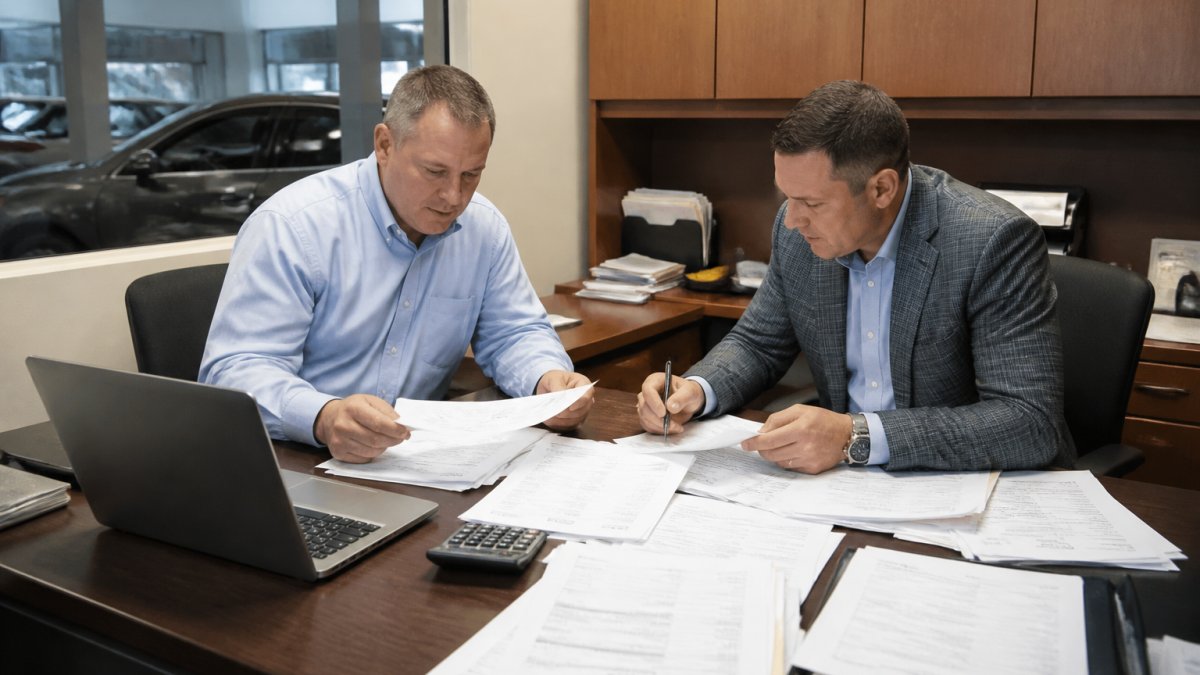
A dealership vendor audit is a line-by-line review of every invoice, contract, and recurring charge tied to your store's operations. At ALL RELATIVE INC., we conduct line-by-line audits of dealership contracts to identify waste, billing errors, and unnecessary services. Best practices for dealership vendor management start here, because you cannot manage what you have never itemized.
What a Line-by-Line Audit Uncovers
A proper audit surfaces three things a summary invoice hides. First, billing errors: charges for licenses, users, or modules that were cancelled but never removed. Second, overlapping products, where two vendors cover the same function and one is redundant. Third, services the store pays for but never uses. None of these show up on a monthly total. They only appear when you match each line item to a contract term and an actual user.
How to Run the Audit Without Disrupting the Store
Pull invoices per vendor, not just the current month. Assign one person to collect documents and keep the vendor relationship out of it; the audit itself is a paperwork exercise. If you want the work handled, our vendor management services for dealerships exist for exactly this step.
2. Build a Dealership Vendor Management Checklist
A dealership vendor management checklist is a single document that records, for each vendor, what you pay, what you receive, who owns the relationship, and when the agreement renews. The checklist is the backbone of the whole program. Without it, every renewal becomes a scramble.
The Checklist by Vendor Category
| Vendor Category | What to Verify | Owner |
|---|---|---|
| DMS and core systems | User counts, module licensing, contract term | IT Manager |
| Network and phone services | Circuit counts, bandwidth tier, billing accuracy | IT Manager |
| Marketing and lead providers | Lead volume delivered vs. billed, cancellation terms | GM |
| F&I and compliance tools | Active users, overlapping products, renewal dates | Finance Director |
| Facilities and service vendors | Service scope, frequency, price escalation clauses | Service Manager |
What to Do With the Results
Sort every vendor into one of three buckets: keep, renegotiate, or exit. The bucket decides your next action, and the checklist gives you the evidence to act. A structure can help you capture the fields you need. A ready-made vendor contract management checklist gives you a starting point to work from.
3. Run a Proper Vendor Contract Review for Dealerships
A vendor contract review for dealerships means reading every active agreement against what the store actually uses, then documenting price, obligations, and renewal timing in one place. Most contracts auto-renew quietly. The review's job is to make sure no renewal happens by default.
Check four things in every agreement: the renewal notice window, the price escalation clause, the service scope, and the termination terms. A common mistake is assuming the vendor will flag a renewal. They will not; the notice period usually favors them. Centralized vendor records turn this from a yearly panic into a standing process. For a vendor contract review, read every active agreement against what the store actually uses.
4. Define Requirements and Service Levels Before You Sign
Requirements come before selection, not after. Write down what the store needs the vendor to deliver, in measurable terms, before you take a single sales call. JPMorgan Chase's vendor management guide makes the same point: define business requirements and service-level expectations first, and involve stakeholders early.
A service-level agreement should state response time, delivery time, uptime, and remedies when the vendor misses. Vague language like "prompt service" protects the vendor, not you. Put the numbers in writing, and tie them to the renewal decision.
5. Track Dealership Vendor Performance Metrics That Matter
Dealership vendor performance metrics are the numbers you review on a fixed schedule to confirm each vendor delivers what the contract promises. Pick a small set and review them quarterly: on-time delivery, service-level attainment, response time to issues, billing accuracy, and total cost against budget. Allianz Trade's vendor management guidance recommends setting reporting rules and performance metrics in the contract itself, so the vendor reports against the same numbers you track.
A scorecard turns a vague feeling that a vendor is underperforming into a documented fact. That fact is what you bring to a renewal conversation. A scorecard can help document vendor performance for a renewal conversation. A practical vendor performance management rhythm keeps vendors delivering on cost, service, and contract commitments.
6. Govern Vendor Data Access and Automotive Compliance
Vendor data access is a risk decision, not an IT formality. Every vendor with access to customer records, credit applications, or DMS data is a compliance exposure. the Federal Trade Commission's Safeguards Rule requires dealerships to maintain a written information security program and oversee service providers who handle customer information.
Apply three controls: limit access to the data each vendor actually needs, require written security standards in the agreement, and review access when a contract ends. The vendor lifecycle does not stop at signing. It stops when access is revoked and records are closed out.
7. Manage Multiple Locations and Vendor Offboarding
Multi-location dealerships need one governance model, not three separate vendor relationships. Standardize the checklist and scorecard across stores, then compare what each location pays for the same service. Price gaps between stores for identical services are one of the most reliable findings in a multi-store review. Ramp's vendor management best practices recommends reviewing renewal terms and routing agreements through legal review, which matters more, not less, when several stores share a vendor.
Offboarding deserves the same discipline as onboarding. Cancel in writing, confirm the final invoice, revoke system access, and archive the contract. For stores juggling several agreements at once, a shared checklist can help organize vendor records across locations. Guidance on managing multiple dealership vendor contracts covers contracts across several stores.
Book a Line-by-Line Vendor Audit
The hard part of dealership vendor management is finding the hours to apply best practices across invoices and contracts. ALL RELATIVE INC. is independent: we do not represent vendors or sell software, so our only interest is your profit. We conduct line-by-line audits of DMS, technology, and vendor contracts, identify unnecessary costs and overlapping products, and help you resolve billing errors and improve contract terms. Get started with ALL RELATIVE INC. and find the profit leaks hiding in your vendor spend.
Frequently Asked Questions
What is vendor management at a car dealership?
Vendor management at a car dealership involves overseeing outside suppliers and their agreements. A dealership may keep records of agreements, assign internal owners, set service expectations, and review performance and billing.
How often should a dealership review vendor performance and contracts?
Dealerships can set a review schedule for vendor performance and contracts, including reviews before renewal dates. A dealership vendor audit can examine pricing, service necessity, and contract terms.
How can a dealership identify vendor billing errors and unnecessary services?
A line-by-line review of invoices and contracts can help identify billing errors, unnecessary services, and overlapping products.
What metrics should dealerships use to measure vendor performance?
Dealerships can choose vendor performance measures that fit their needs, such as billing accuracy and total cost against budget.