 listicle
Common Hidden Costs in Dealership Contracts
Table of Contents
- Common Hidden Costs in Dealership Contracts
- Dealer Add-Ons and Fees That Inflate the Vehicle Price
- What the Car Dealership Documentation Fee Really Covers
- Extended Warranty Dealership Cost: Separating Value From Padding
- How a Dealership Contract Audit Uncovers Recurring Leaks
- Reading the Buyer's Order and Retail Installment Contract Line by Line
- Frequently Asked Questions
Last Updated: October 12, 2026
Common Hidden Costs in Dealership Contracts
When buyers sign a dealership contract, the vehicle price on the window sticker rarely matches the amount financed. According to CarEdge's guide to dealer fees, the median dealer documentation fee sits around $370, and quoted doc fees can range from under $20 to nearly $1,500 depending on the state and the dealer.
At ALL RELATIVE INC., we've spent over 20 years on the other side of the desk, auditing the contracts and vendor agreements that dealerships sign every day.
The five categories we cover, doc fees, prep charges, add-ons, extended warranties, and finance products, account for most of the gap between the advertised price and the out-the-door total.
Dealer Add-Ons and Fees That Inflate the Vehicle Price
Dealer add-ons and fees are the charges a dealership tacks on beyond the vehicle price, and they're the first place to look for padding.
Common examples:
- Advertising fee - a pass-through charge some dealers add to cover regional ad costs.
- Market adjustment or dealer markup - an added amount above MSRP, often on in-demand models.
- Dealer preparation or reconditioning fee - a charge for cleaning, inspecting, or prepping the vehicle.
- Destination fee - a manufacturer charge for delivery to the dealership, which is standard but sometimes duplicated on the contract.
The key distinction is which charges are required and which are optional. As MacLane's Auto's guide to hidden dealership fees notes, several of these charges can be negotiable or removed entirely if you ask before signing.
| Fee Type | Set By | Typically Negotiable? |
|---|---|---|
| Destination fee | Manufacturer | No |
| Advertising fee | Dealer | Often |
| Market adjustment | Dealer | Often |
| Dealer prep fee | Dealer | Sometimes |
What the Car Dealership Documentation Fee Really Covers
The car dealership documentation fee, usually called a doc fee, is a charge for processing the paperwork that transfers the vehicle to you.
What it actually covers varies. In practice, the doc fee compensates the dealership for preparing the title, registration, and lender paperwork. According to CarVibe Houston's guide to hidden dealer fees, documentation fees can sometimes exceed a state's cap, which is why it pays to know your state's rule before you sit down.
Why the doc fee is not one number
Three variables drive what you actually pay:
- State cap or no cap. Some states set a maximum a dealer may charge; others leave the amount open. A handful of states require the fee to be disclosed on the buyer's order and on the retail installment contract. Where a cap exists, the cap usually applies per transaction, not per vehicle, so a dealer cannot stack it.
- Taxability. In many states the doc fee is taxable because it is part of the sale price; in others it is treated as a non-taxable service charge. That difference changes your out-the-door total by the sales-tax rate on the fee.
- Uniformity rules. Several states require a dealer to charge the same doc fee to every customer, cash or financed. That rule exists to stop dealers from using the fee as a hidden negotiation lever, and it is why a finance manager may tell you the fee 'cannot be removed', the dealer may be legally barred from waiving it for one buyer and not another.
How to verify the doc fee on your contract
- Find the line labeled 'documentation fee,' 'doc fee,' or 'dealer services fee.' If the same charge appears under two labels, that is a duplicate.
- Confirm it is listed separately from title, registration, and license fees. Bundling them on one line makes it harder to see what you are actually paying for.
- Check whether the fee is included in the taxable amount on the contract. If it is, your sales tax should reflect it; if it is not, confirm the state treats it as non-taxable.
- Compare the amount to your state's cap if one exists. A fee above the cap is a red flag worth raising before you sign.
Is the doc fee negotiable?
Usually not once it is printed on the contract, and in uniformity-rule states the dealer may be prohibited from waiving it at all. The practical move is not to fight the fee line but to negotiate the vehicle price and any dealer-set add-ons so the total out-the-door number lands where you want it. Ask for the out-the-door figure in writing with the doc fee broken out, then compare that single number across dealers rather than comparing sticker prices.
Extended Warranty Dealership Cost: Separating Value From Padding
The extended warranty dealership cost is the amount added to your contract for a service contract or vehicle protection plan.
What to examine:
- Coverage terms - what's actually covered, for how long, and what's excluded.
- Deductible - the amount you pay per repair claim.
- Overlap - whether the plan duplicates coverage you already have from the manufacturer or your insurer.
- Cancellation terms - whether you can cancel for a prorated refund.
Extended warranties, service contracts, and vehicle protection plans are optional products. As Billshark's guide to car loan charges points out, extended warranties are among the costs buyers should review carefully before agreeing.
Other finance-desk products that behave the same way include:
- Rustproofing and paint protection
- VIN etching and anti-theft protection
- Wheel and tire warranty
- Nitrogen-filled tires
Each of these is optional. None should appear on your contract without your explicit agreement.
How a Dealership Contract Audit Uncovers Recurring Leaks
A dealership contract audit is a line-by-line review of every charge, fee, and product on a purchase or lease agreement, with the goal of separating required costs from optional padding. For dealership owners, the same discipline applies to vendor and DMS contracts, where billing errors and overlapping services quietly drain profit month after month.
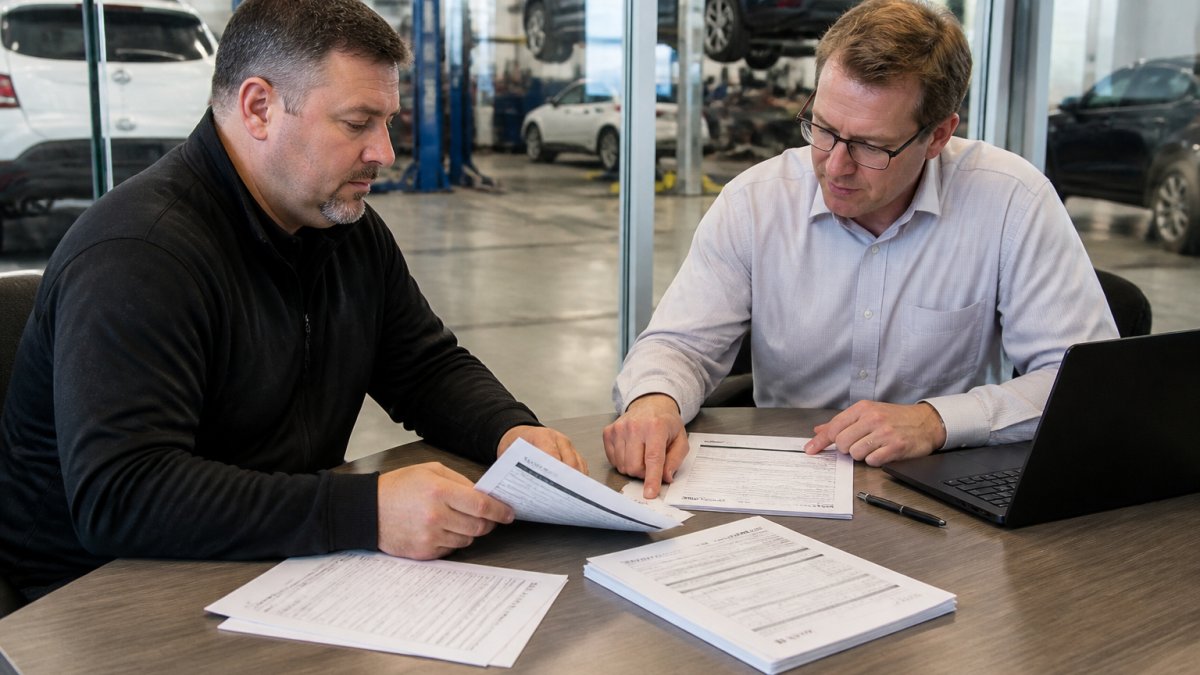
For buyers, the audit is simple: read every line, ask what each charge is for, and decline anything you didn't request. For dealerships, the audit is more involved. It means pulling invoices, comparing them to contract terms, and checking for services that were billed but never used.
At ALL RELATIVE INC., we conduct these audits as an independent party. We don't sell software and we don't represent vendors, so our only interest is the dealer's bottom line. In practice, the leaks we find most often fall into three buckets:
- Billing errors on DMS and technology contracts
- Overlapping products that duplicate each other
- Services that were never canceled after they stopped being used
Reading the Buyer's Order and Retail Installment Contract Line by Line
Reading a buyer's order and retail installment contract line by line is the single most effective way to catch hidden costs before they're financed. The buyer's order lists the vehicle price and add-ons; the retail installment contract shows the amount financed, interest rate, loan term, and monthly payment. The two documents must agree, and the fastest way to find padding is to reconcile them side by side.
Step 1: Reconcile the buyer's order
Work top to bottom and put a check next to each line you agreed to:
- Vehicle price and any dealer markup
- Itemized fees (doc, prep, advertising, destination)
- Add-ons and optional products
- Trade-in value and down payment
If a line has no check, ask what it is and who authorized it. A charge you did not request is the first thing to strike.
Step 2: Reconcile the retail installment contract
Now match the contract against the buyer's order:
- Amount financed
- Interest rate and loan term
- Monthly payment
- Any products rolled into the loan
The amount financed should equal the agreed price plus fees and add-ons, minus down payment and trade equity. If it is higher, something was added between the two documents.
Step 3: Do the financed-add-on math
This is the step competitors skip. An add-on financed into the loan costs more than its sticker price because you pay interest on it for the life of the loan. A simple way to see the real cost:
- Note the add-on price.
- Note your interest rate and loan term.
- Multiply the add-on price by the total of your payments per dollar borrowed over that term.
A protection plan added to a five-year loan accrues interest for the full five years. That is the difference between financing costs and dealer add-ons: one is the cost of borrowing, the other is the cost of the product, and both compound when combined.
Step 4: Build a one-page out-the-door worksheet
Before you sign, write these numbers on a single sheet and keep it in front of you:
| Line | Buyer's order | Contract | Difference |
|---|---|---|---|
| Vehicle price | |||
| Dealer fees (itemized) | |||
| Government fees (title, registration) | |||
| Optional products | |||
| Sales tax | |||
| Trade-in / down payment | |||
| Amount financed | |||
| APR and term | |||
| Monthly payment |
Any difference in the last three rows is where hidden cost lives. If the out-the-door price doesn't match what you agreed to verbally, stop and ask for an itemized explanation of the difference.
If you find an unauthorized charge after signing
- Request a copy of the signed contract and the buyer's order in writing from the dealership's finance manager.
- Identify the specific line and the amount in dispute, and state in writing that you did not authorize it.
- Contact your lender and ask whether the charge can be removed from the amount financed.
- Many states give buyers a limited window to cancel optional products like service contracts; check your state's rule and the cancellation terms in the product agreement.
A line-by-line reading is not about distrust. It is about making the two documents agree before your signature makes them binding.
Frequently Asked Questions
What are the most common hidden costs in a dealership contract?
Dealer contracts typically bury costs in three places: fees added at signing, optional products bundled into financing, and recurring vendor charges. Common examples include documentation fees, dealer preparation charges, advertising fees, market adjustments, VIN etching, paint protection, and extended service contracts. Each line item can add hundreds or thousands to the total cost, so reviewing the buyer's order and retail installment contract line by line before signing is the only way to catch them.
How can I tell whether a dealership fee is optional?
Ask the finance manager to mark each charge as required or optional on the buyer's order. Government charges like sales tax, title, and registration are mandatory. Documentation fees are dealer-set and often negotiable. Products such as rustproofing, nitrogen-filled tires, pinstriping, and wheel and tire warranties are optional and can be declined. If the contract bundles them without a clear opt-in, request an itemized breakdown and a rewritten contract before signing.
What should I check before signing a dealership contract?
Compare the vehicle price, out-the-door price, amount financed, interest rate, loan term, and down payment against the verbal quote. Verify every fee and add-on is disclosed and authorized. Confirm the trade-in value and payoff are correct. Check that the documentation fee matches your state's cap if one applies. If anything is unclear, ask for a copy of the buyer's order and retail installment contract to review overnight before signing.
How do I dispute an incorrect charge on a dealership bill?
Contact the dealership's finance department in writing with the specific line item, the amount, and why you believe it is incorrect. Reference your signed contract and any state fee caps that apply. If the dealer does not resolve it, file a complaint with your state attorney general's office or the state motor vehicle dealer board. For recurring vendor billing errors, a dealership contract audit can identify the pattern and support a formal dispute with the vendor.
Why do dealerships push extended warranties?
Extended warranties, also called service contracts or vehicle protection plans, carry high margins for the finance department. They are optional products, not required for financing or purchase. The dealership cost of an extended warranty is typically a fraction of the retail price, and the finance manager earns commission on each one sold. Buyers and dealership owners alike should compare the coverage terms, exclusions, and cancellation rights before agreeing to any service contract.